
From Jean-Marc Deschamps, Political Secretariat of the E.C.C.I.
The content of this article was published in a print-only edition of L’Humanité. The French-language edition can be found here.
What I know about the economy I learned from watching ships. Orders dry up, and then the yard closes, and then the town has nothing left. The economists arrive later to explain why this was efficient.
I mention this because what I am about to describe does not require an economist. It requires a dockworker, a truck driver, or a woman who buys groceries. The people running the world economy are building a catastrophe, and the catastrophe is not complicated. It is, in fact, stupid. It is a series of decisions, each of which makes the next one worse, made by people who will not pay the price for any of them. I have heard this called a “doom loop” in the financial press. I prefer to call it what it is: an idiot doom spiral. The idiots are in charge. The doom is for us.
On February 20, 2026, the United States Supreme Court ruled six to three that the President of the United States did not have the legal authority to impose the tariffs he had been imposing for thirteen months. The International Emergency Economic Powers Act, the court held, does not authorize tariffs. Chief Justice Roberts wrote the opinion. The case was called Learning Resources, Inc. v. Trump. The tariffs, which covered virtually all categories of imported goods from China, Canada, Mexico, and dozens of other countries, were struck down.
This should have been a crisis. Over $166 billion in tariffs had already been collected from American importers, money that ultimately came from the wallets of American workers in the form of higher prices on everything from auto parts to fresh vegetables. The refund process, as one Supreme Court justice predicted, is a “mess.” The Court did not order refunds. The lower courts are still arguing about it. Customs and Border Protection was instructed to stop collecting, but the order was later partially suspended so they could sort out the paperwork.
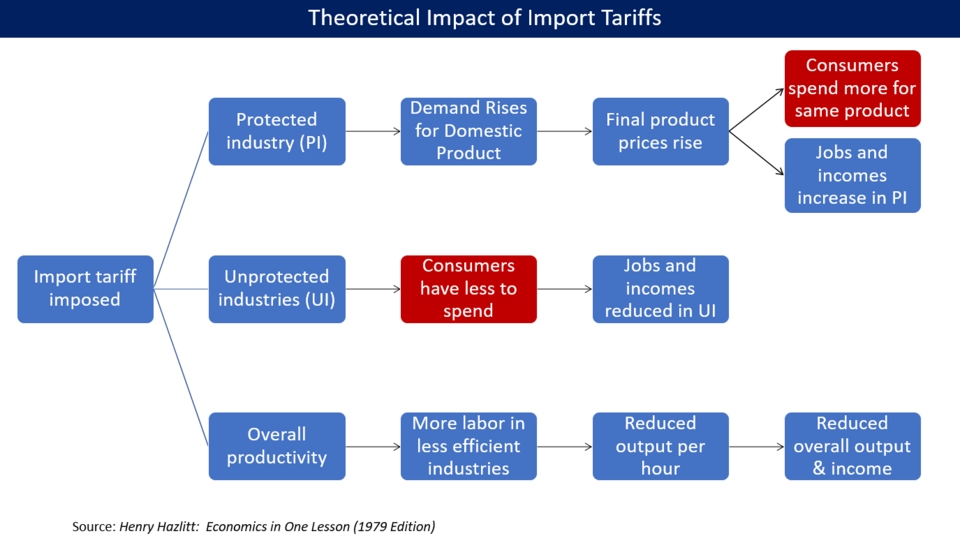
Trump’s response took four hours. By the end of the day, he had signed a new executive order imposing a 10% tariff on all countries under Section 122 of the Trade Act of 1974. Section 122 is an emergency balance-of-payments provision. It expires after 150 days, so it expires in July. In the meantime, he announced he would pursue additional tariffs under Sections 232 and 301. Different statutes, different pretexts, same result.
The Tax Foundation, not a radical organization, estimates that the current tariff regime amounts to the largest tax increase as a share of GDP since 1993. The average U.S. household is paying an additional $1,500 per year. This is a tax on imported goods: on the food, clothes, electronics, building materials, and industrial inputs that the U.S. working class buys and uses every day. It is a consumption tax imposed by executive decree, bypassing the legislature, struck down by the judiciary, and reimposed within hours.
While the President was busy getting his tariffs struck down and reimposed, the war he started three weeks earlier was destroying the energy market.
The Strait of Hormuz was closed on March 4, eight days after the first strikes on Iran. Twenty percent of the world’s oil transits that strait. Brent crude, which sat in the low seventies at the start of the year, broke $110 within three weeks. The U.S. consumer noticed this at the pump: four dollars a gallon, up from roughly two-eighty in January.
The Bangladeshi garment worker noticed it differently. Fertilizer, manufactured from natural gas, became unaffordable for the next planting season across large parts of South and Southeast Asia. The Filipino fisherman noticed it in the price of diesel. The Kenyan commuter noticed it in the cost of the matatu fare. Egypt imposed mandatory curfews on shops to conserve electricity. Indonesia ordered government workers to stay home on Fridays to save fuel. The Philippines declared a national energy emergency.
Tariffs inflate the cost of imported goods. The war inflates the cost of energy. And energy is embedded in everything, in transport, manufacturing, agriculture, heating, cooling, so the two increases multiply. A worker buying a bag of imported rice is paying the tariff surcharge on the product and the fuel surcharge on the ship that carried it and the truck that delivered it and the fertilizer that grew it.
The IMF has cut global growth projections to 2.8 percent for 2025 and 3.0 percent for 2026. United States growth has been cut to 1.8 percent for 2025 and 1.7 for 2026. The recession probability is somewhere between 37 percent (the IMF’s polite estimate) and 50 percent (the estimate of people who are less polite). Morningstar, the financial research firm, called the tariff regime “a self-inflicted economic catastrophe for the United States.”
The technology sector has spent the last two years building what it calls the artificial intelligence revolution. The material form of this revolution is data centers, enormous warehouse-scale facilities filled with processors that consume electricity at rates previously associated with medium-sized cities. The industry’s own projections estimate that AI-related energy demand will grow by 160 percent by 2030. OpenAI has committed to $400 billion in data center spending against revenue projections of $60 billion. The math does not work under normal conditions. Under conditions of an oil war and a closed strait, it is suicidal.
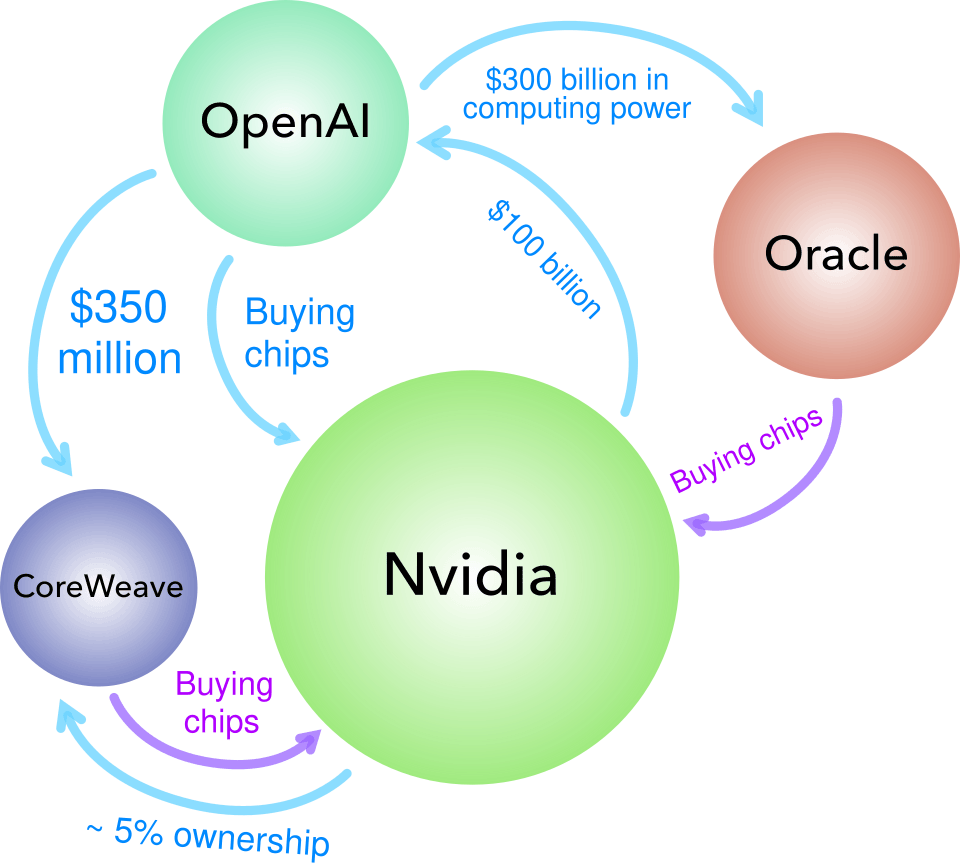
The AI boom requires cheap, stable energy. The Iran war destroyed cheap, stable energy. And the tariffs jack up the price of every physical component, from chips and cooling systems to construction steel, that a data center is made of. You have an industry trying to build the most energy-intensive infrastructure in history at the exact moment that a war started by the same government has made energy scarce and expensive, while a tariff regime imposed by the same government has made the building materials more costly.
Sam Altman, the chief executive of OpenAI, recently compared the energy consumed by artificial intelligence to the energy consumed by a human being over twenty years of life. He said it takes a lot of energy to train a human, too: all the food you eat before you become productive.
I have worked with men who started in the shipyard at sixteen. They did not consume $400 billion in electricity before they became useful. They consumed bread, coffee, and cigarettes, and they were welding hull plates inside a month.
The comparison is obscene, but it is also revealing. Capital has begun to speak about its machines the way it once spoke about its workers: as a regrettable but necessary consumption of resources in the production of value. The difference is that the workers could strike.
Underneath all of this, underneath the tariffs, the war, the energy crisis, and the AI hemorrhage, there is a fourth crisis that the financial press discusses in a whisper when it discusses it at all.
The shadow banking sector (private credit funds, commercial real estate lenders, leveraged loan vehicles) is sitting on a refinancing wall of $1.5 trillion in commercial real estate loans maturing by the end of 2026. These loans were written in a different world: low interest rates, rising property values, stable occupancy. The world they were written for is gone. Interest rates have not returned to their post-2008 lows. Commercial real estate occupancy has not recovered from the pandemic shift to remote work. Property values in major office markets are down thirty to forty percent from their peaks.
Forty percent of private credit borrowers now have negative free cash flow. They cannot cover their operating costs and debt service from their income. Some are borrowing more to stay current. Others use a mechanism called Payment-in-Kind interest, or PIK, where the borrower skips the cash payment and the unpaid interest gets added to the principal of the loan instead. The balance sheet says the loan is performing. The building sits half-empty. The default hasn’t happened yet, but only because it has been reclassified as growth.
These funds cannot go to the central bank for a bailout when the wall hits, and it is hitting now, through 2026 and into 2027. They are not regulated banks. They do not have access to the Federal Reserve’s lending facilities. They are, by design, outside the regulatory perimeter. They were put outside the regulatory perimeter because their investors (hedge funds, pension funds, sovereign wealth funds) wanted higher returns and less oversight. They got both. Now they will get the consequences of both, and those consequences will pass through the economy the way a kidney stone passes through a body: painfully, slowly, and with damage to everything it touches.
The connections across all four crises are direct. Businesses that depend on private credit for financing are simultaneously facing higher borrowing costs from the refinancing crunch, higher input costs from the tariffs, and higher operating costs from the energy shock. Meanwhile, capital that might otherwise flow into productive enterprise is being diverted into data center construction. This investment won’t employ many workers and won’t produce goods that workers can buy.
The government started a war that raised the price of fuel. The government imposed tariffs that raised the price of goods. The government’s own courts said the tariffs were illegal, and the government reimposed them the same day. The government’s central bank cannot lower interest rates to stimulate the economy because the war and the tariffs are pushing prices up, and lowering rates would push them higher. The government cannot raise rates to control prices because the commercial real estate sector, the private credit sector, and a large portion of corporate America are carrying so much debt that higher rates would trigger a cascade of defaults. The government is trapped between the inflation it created and the debt crisis it enabled.
This is the idiot doom spiral. The war was a decision. So were the tariffs. So was the deregulation that created the shadow banking bubble. So was the refusal to plan for what happens when the AI sector tries to consume the energy grid of a country that just started a war in the Persian Gulf. These were choices made in offices by people with degrees and staff, and every cost was passed to the working class.
Jean-Marc Deschamps is a member of the Political Secretariat of the E.C.C.I. and a former shipyard worker and CGT shop steward from Saint-Nazaire.


Leave a Reply