From Tarek Haddad, Political Secretariat of the E.C.C.I.
On the third of June, four people sat at a table in Washington and arranged the next phase of a war they were not fighting. They were Israel’s ambassador to Washington, Yechiel Leiter; Lebanon’s ambassador to Washington, Nada Hamadeh; the U.S. ambassador to Lebanon, Michel Issa; and a State Department official, Daniel Holler, who signed a joint statement calling for a ceasefire. Its terms fell on one side. Hezbollah was to halt its fire completely and pull its fighters back from the sector south of the Litani River. The group being told to disarm and withdraw had not been invited to the room.
The arrangement lasted about a day. Hezbollah’s leader, Naim Qassem, rejected the terms as serving the enemy’s objectives, while repeating that he would accept a mutual cessation paired with an Israeli withdrawal. Israel’s defense minister, Israel Katz, answered that his forces would keep operating in Lebanon and would not withdraw at all. An anti-tank missile in the border hills killed an Israeli soldier. A UN peacekeeper died under mortar fire in the southeast. In Washington, the House of Representatives rejected, by 92 votes to 324, a resolution that would have required the president to pull U.S. forces out of Lebanon. Trump, who had spent the spring bombing Tehran, said the matter was “interconnected with Iran.”
What Washington calls a ceasefire is a disarmament instrument. The talks that opened in April, billed by their sponsors as a historic opening, were aimed from the first session at one result: Hezbollah giving up its weapons. Keeping Hezbollah out of the room serves a function. The ceasefire is written to depend on Hezbollah’s compliance, which leaves the one party that has to comply with no hand in the terms, and its refusal, delivered on schedule the next morning, becomes the violation that licenses the next round of strikes.
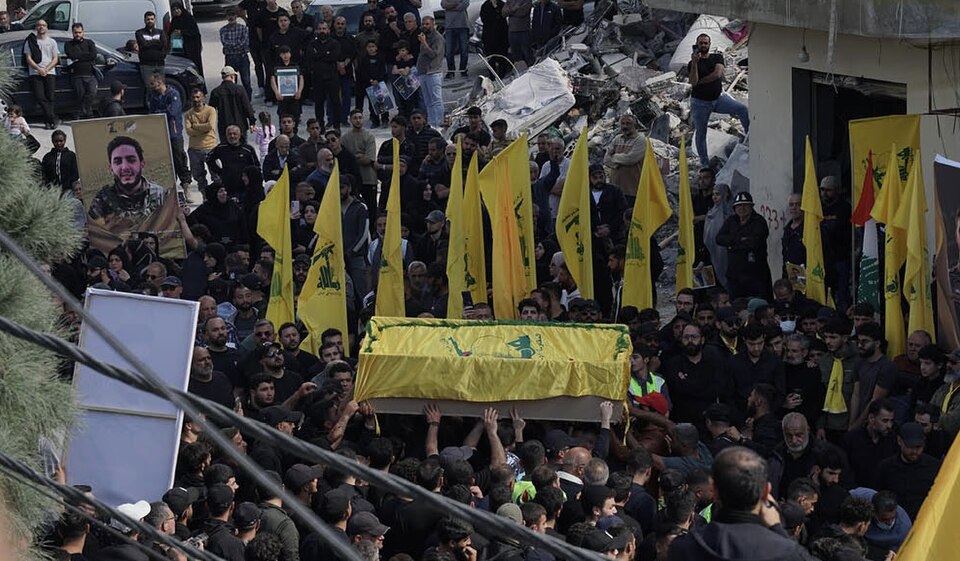
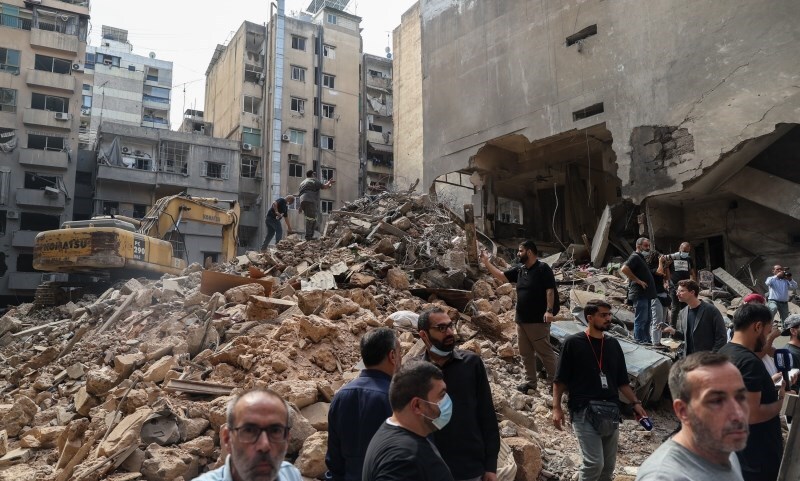
The bombing has been heavy and continuous. On the eighth of April, hours after a ceasefire was announced in the war on Iran, the Israeli air force opened what it called its largest assault yet on Lebanon and killed more than three hundred people in a single day. Tel Aviv and Washington held that the truce with Iran did not cover the Lebanese front. Tehran, Hezbollah, and the families under the rubble read it differently. A ceasefire announced on the seventeenth of April, produced by the same Washington talks, was extended through the spring and stopped almost nothing: Israeli strikes went on daily and Israeli troops stayed across the south. By the latest count from Lebanon’s health ministry, the dead are past three thousand, more than two hundred of them children, and over a million people have left their homes, most from the south and from the Dahiyeh, the southern suburbs of Beirut that Israel emptied and flattened in 2006 and again in 2024.
There was an Israeli-Lebanese agreement brokered by the United States once before. The Agreement of the 17th of May, signed in 1983 under the guns of the Israeli occupation and the U.S. Sixth Fleet, was abrogated by Beirut within a year, because no Lebanese government could survive having signed it. According to their own sponsors, the current talks are the first of their kind since that collapse. The drafters of 1983 also said they were ending a war while setting the terms of an occupation and naming it peace, and the Lebanese took the paper apart fast enough to prove they knew the difference. Whether they know it a second time is the question of the summer.
The dependence on display in Washington was built into Lebanon at its founding. The state was cut from the body of Ottoman Syria by French finance and French artillery, confirmed at San Remo in 1920, and held down through the revolt of 1925, when French batteries shelled Damascus. The borders, the confessional formula written into the constitution, the currency pegged first to the franc and then to the dollar, the permanent reliance on a foreign protector were written in from the start. The state was built to depend. The Communist International understood this early. The League Against Imperialism that met at Brussels in 1927 seated Syrians and Lebanese beside Indians and Africans.
The state now preparing to sign is the same apparatus that robbed its own population. When the banks failed in 2019, they and the central bank seized the deposits of millions of people, as well as wages, pensions, and diaspora remittances. They turned them into losses carried by everyone except the families who own the banks and sit in parliament. Those families, the za’im households that have run the country since independence, are the ones negotiating its surrender. They will manage the rebuilding of the south the way they managed the aftermath of its earlier ruin, as a stream of contracts, Gulf money, and Western loans routed back through their own hands. The tobacco farmers of Nabatieh and the day laborers of the Dahiyeh will come home to debt and a ruin where a house stood.
A word on the force whose weapons are the prize. It would be convenient to call Hezbollah the armed people, and the region’s bourgeois-nationalist press calls it exactly that. We do not. The Party of God is a confessional formation, clerical at the top, financed and steered from Tehran, where a clerical-bourgeois state keeps its own working class in line with the prison and the noose. It holds the real loyalty of the Shia poor of the south because for forty years it did what the bourgeois state would not: buried the dead, ran the clinics, paid the families of its fighters, and stood between the villages and the Israeli army. That loyalty is earned, and it is not socialism. A communist defends the people of the south against the bombs falling on them this week without pretending that the party speaking in their name is the instrument of their freedom. The left of this region has repeatedly refused to hold those two thoughts at once and has made itself, by turns, an apologist for clerical reaction and a recruiting sergeant for empire.
Trump’s use of the term “interconnected” is refreshingly transparent. The disarmament of the south is one clause in a settlement that runs from the wrecked command structure in Tehran through the Gulf monarchies toward the normalization between Israel and Saudi Arabia that Washington has wanted for a decade. Lebanon is being made to deliver its part at gunpoint.


Leave a comment