
From Maria Ivanova, Political Secretariat of the E.C.C.I.
The 1956 Hungarian Uprising is often portrayed as a spontaneous, unplanned revolt against the Soviet-backed government, which lasted from October 23 to November 10. According to this conventional narrative, the uprising began with a student demonstration in Budapest, where protesters demanded greater political freedom, economic reforms, and the withdrawal of Soviet troops. The movement rapidly grew as thousands of citizens joined in, toppling Soviet symbols and clashing with Hungarian police and Soviet forces. After a few days of fierce resistance, Soviet troops withdrew, and reformist leader Imre Nagy assumed the role of Prime Minister, promising political reforms and withdrawal from the Warsaw Pact.
Despite this initial withdrawal, the Soviet Union soon reasserted control. On November 4, Soviet tanks re-entered Budapest and other key cities to suppress the uprising. Despite fierce resistance from Hungarian fighters and civilians, the Soviet forces quickly overwhelmed the rebels. By November 10, the uprising had been effectively quashed, resulting in thousands of Hungarian casualties and injuries, with many more arrested or fleeing the country as refugees.
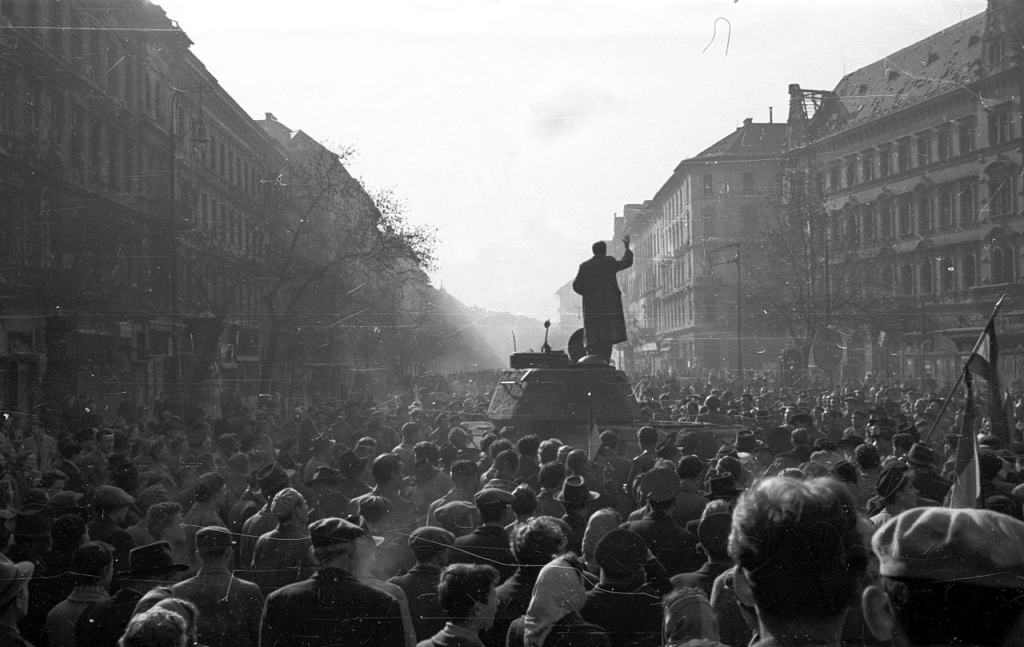
Approximately 2,500 Hungarians lost their lives during the uprising, while Soviet troops suffered around 720 fatalities. These figures might initially suggest a brutal Soviet crackdown, but the reality is more nuanced. The 2,500 Hungarian deaths spanned from the start of the uprising on October 23, 1956, through the end of 1957 and resulted from a range of causes. Many of these casualties stemmed from clashes between Hungarian military units, police, state security forces, and various rebel factions. Additionally, internal strife among the rebels and confrontations involving Hungarian forces, even when Soviet troops were not directly engaged, significantly contributed to the overall toll.
During the uprising, the Soviet military initially adopted a cautious strategy, with orders not to shoot first, which actually led to high Soviet casualties. Despite heavy criticism of the Soviet forces for their role in suppressing the rebellion, evidence reveals that Hungarian forces, including rebel groups, engaged in their own brutal and chaotic fighting, sometimes against each other. After Soviet troops temporarily withdrew from Budapest on October 30, 1956, violent power struggles erupted among rebel factions, resulting in numerous deaths not directly attributable to Soviet action. Additionally, incidents of “white terror” emerged, where groups such as the Hungarian National Guard under Béla Király targeted communists and security officers, inflating the death toll. In this context, the Soviet military’s actions, though forceful, were only one facet of the violence that pervaded the uprising and its aftermath.
Understanding the biographies of key figures in the 1956 Hungarian Revolution, such as Pál Maléter, is crucial for a comprehensive view of the conflict. At the time of the uprising, Maléter was a colonel in the Hungarian People’s Army (VNA). His background is notable, as he had previously served in the army of fascist Hungary during World War II, fighting against the Soviet Union and “Judeo-Bolshevism.” Hungarian soldiers on the Eastern Front were infamous for their brutality, rivaling that of the SS, though this was not universally the case.
After his capture, Maléter underwent a swift process of re-education and soon began promoting communist propaganda among Hungarian prisoners. His cooperation with Soviet intelligence was so valued that by 1944, he was involved in partisan operations against Hungarian and German forces. This level of trust was exceptional, as few defectors or prisoners earned such confidence from their former adversaries. Unfortunately, the GRU archives, which could provide insight into Maléter’s merits and the reasons behind his trusted status, remain classified. It would be naive to assume that someone with a history of working closely with an intelligence service could easily sever those connections.
For his actions, Maléter was awarded the Order of the Red Star. Subsequently, he studied at the Military Academy under the army officer Béla Király. Király remembers Maléter as an extraordinarily fervent cadet, so dedicated that he fainted from exhaustion during his training. Doctors were concerned for his health and had to order him to the hospital. Király also noted that Maléter was prone to frequent changes in his opinions and positions.
Given his military background and behavior during the uprising, Király’s assessment of Maléter seems justified. On October 23-24, Maléter initially opposed the rebels, professed his loyalty to the government, and reaffirmed his commitment to communism. He actively fought against the insurgents, a fact that Király would hold against him. According to Király, on October 25, Maléter led five tanks to the Kilian barracks to quell a mutiny within a military unit. However, he ultimately switched sides, aligning himself with the rebels.
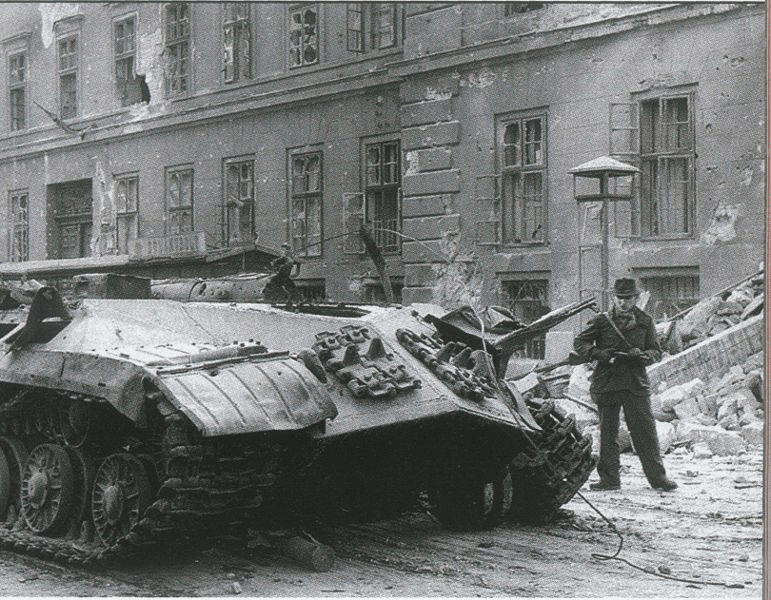
Imre Nagy is another pivotal figure in this narrative. During World War I, he served in the Austro-Hungarian army and was captured by Russian forces. Following his capture, Nagy participated in the Russian Civil War and subscribed to communism, subsequently living in the USSR until 1945. His work included occasional assignments for the Comintern (the Soviet entity charged with advancing international communism) and involvement as an NKVD informant. Notably, his candidacy for Soviet citizenship and a leadership role in the Comintern faced significant opposition from Hungarian Communist Party leaders, including Béla Kun. While most of his opponents were executed during the purges of 1937-1938, Nagy was spared. In 1990, at the request of the Hungarian government, KGB Chairman Vladimir Kryuchkov provided copies of Nagy’s case file, which included reports of his denunciations and betrayals. These documents, initially concealed for political reasons, were partially leaked to the Italian press in the early 1990s.
Nagy later took on the role of Minister of the Interior, where he achieved the return of most Hungarian prisoners of war from the USSR and led repressions against fascists and nationalists. During this period, he maintained a close association with Lavrentiy Beria, chief of Soviet state security. In 1953, Beria pressured Hungarian leader Mátyás Rákosi to appoint Nagy as Prime Minister. Ironically, just three days after Nagy’s appointment, Beria was arrested in Moscow. By 1955, Nagy was dismissed and expelled from the Communist Party for holding “right-wing views.” Nagy was among the first Hungarian communists to recognize the emerging “thaw” in the socialist bloc. His grievances with the Rákosi regime made him popular with the masses, a popularity further amplified by Radio Free Europe, which portrayed him as a martyr. The West’s support for Nagy stemmed from his political flexibility and personal vulnerabilities, making him an ideal figure for the transitional period.
Additionally, Nagy likely harbored resentment toward his Soviet overseers, who possessed compromising information about him. As a result, he gradually emerged as a leader of the Hungarian opposition. On October 23, he addressed demonstrators in Parliament Square, pleading with them to disperse. According to US Marine Sergeant James Bolek, who was part of the embassy guard corps, Nagy’s call to the crowd to remain “comrades” was met with the retort: “No more comrades, no more communism.”
On October 24, Nagy was appointed Prime Minister by Soviet order. In a radio address, he urged those he labeled as “fascist provocateurs” to lay down their arms, denouncing the uprising’s participants as “fascists” and “reactionaries.” Simultaneously, he claimed that Soviet troops were present in Budapest solely at the government’s request.
It soon became apparent that Nagy recognized the shifting power dynamics; the streets no longer belonged to those who had demanded his appointment just a day before.
As the situation evolved, Nagy’s decisions grew increasingly perplexing. He ordered the Hungarian People’s Army to refrain from offensive actions, mirroring the Soviet military’s defensive tactics. On October 28, Soviet and Hungarian forces nearly encircled the main rebel groups in Budapest and were poised to storm and eliminate them. However, Nagy managed to convince the high-ranking Soviet official Anastas Mikoyan, who in turn persuaded Soviet leader Nikita Khrushchev, to withdraw the troops from Budapest.
Following this, Nagy began referring to the previous day’s “fascists” as revolutionaries. However, he faced formidable obstacles. The Military Revolutionary Council, led by Pál Maléter, was already operational in Hungary, while the National Guard, commanded by Béla Király and former World War II officers, was gaining strength. József Dudás, an engineer turned anti-Soviet rebel who demanded a role in the government and refused to disband his troops, added to Nagy’s troubles. Attempting to dismantle all existing armed forces and rebuild them around the National Guard, Nagy encountered strong resistance from Maléter and elements of the Budapest garrison. Béla Király opposed Maléter, leading Maléter to order Király’s arrest, while Dudás refused to recognize the government.
Adding to the complexity, Cardinal József Mindszenty, a prominent anti-communist, rallied Hungarian Catholics to fight for religious freedom, advocating for the reversal of socialist policies and the return of property to former owners. Most of the army was reluctant to follow Maléter, Király, or Mindszenty, given that Nagy remained a professed communist.
On October 30, an anti-communist coup erupted in Budapest, with the Central Committee’s headquarters stormed, guards shot, and several communists either killed or arrested. Fearing for his own safety, Nagy took decisive action by announcing Hungary’s withdrawal from the Warsaw Pact and seeking “new relations” with the West. This move could have been effective, as the West began applying intense pressure on the USSR, enough to make even Soviet Minister of Defense Georgy Zhukov and Khrushchev reconsider their stance on Hungary. However, the onset of the Suez Crisis in Egypt diverted Western attention, and on November 4, Soviet Army units from three directions re-entered Hungary. Nagy, calling for resistance, sought refuge in the Yugoslav embassy.
It is notable that Nagy went to the Yugoslav embassy because, since 1948, Yugoslav leader Josip Broz Tito had been actively working to undermine the socialist bloc, with Hungary as a focal point. Stalin had even planned to use Hungary as a base for a potential war against Yugoslavia. Throughout history, some leaders have stood firm in their beliefs, either proving their convictions correct or facing the consequences of their errors. Salvador Allende of Chile is a notable example; he did not flee but instead chose to die with a weapon in hand, defending his principles until the end. In contrast, Nagy opted for a different course.
Every nation has its own standards for heroism. For instance, Hungarians also honor Béla Király, the commander of the National Guard. Despite his leadership role, Király ordered his largely inexperienced guardsmen—many of whom were teenagers—to hold their ground until the end, only to flee to Austria and then the United States. Such figures exemplify how different cultures define heroism and the complexity of leadership in times of crisis.
An intriguing aspect of Imre Nagy’s story is that he formally retained Soviet citizenship until his death. Documents from the RGASPI files concerning Hungarian communist leaders like Rákosi and Ernő Gerő show that they were stripped of their Soviet citizenship upon their return to Hungary in 1945. However, no similar records exist for Nagy. To date, researchers have found no evidence in any archives indicating Nagy relinquished his Soviet citizenship.
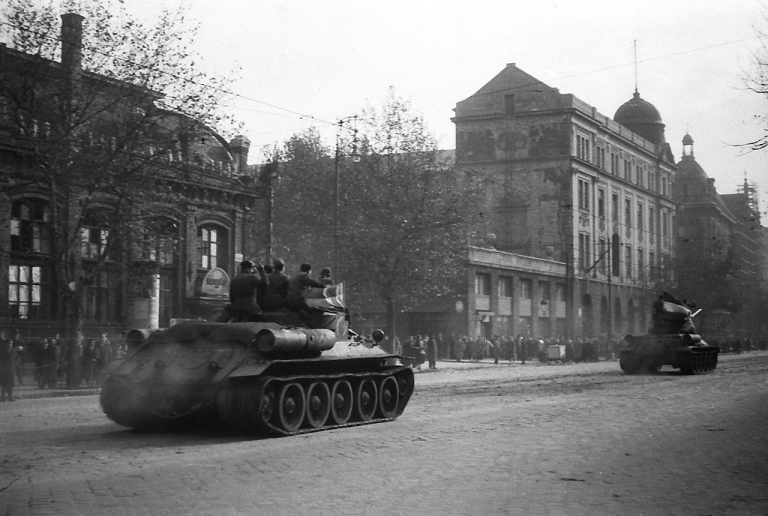
On the morning of October 25, 1956, a crowd, predominantly of women and students, gathered in the square near the Hungarian Parliament. The scene was initially calm, with Hungarian civilians and Soviet soldiers engaging in tentative dialogue across a tense divide. Soviet forces had deployed tanks and an armored personnel carrier opposite the gathering. Unfortunately, this fragile peace soon gave way to a tragic and violent escalation.
According to the widely accepted narrative, the situation escalated when shots were fired from the rooftops surrounding the square, prompting Soviet soldiers to respond with machine gun fire and other weapons. This barrage caused the crowd to flee in panic, resulting in casualties. Estimates of the death toll vary significantly, with some sources reporting as many as 200 fatalities, while others suggest the number was closer to 20.
To grasp the true nature of the events, it’s essential to consider multiple perspectives and pieces of evidence. One crucial account comes from U.S. Marine Sergeant James Bolek, who observed the scene from a nearby building. According to Bolek, around 10 a.m., explosives were dropped onto Soviet tanks and their crews from the roof of his building. The resulting explosions prompted the Soviet soldiers to retaliate by opening fire with machine guns, sweeping their shots from the ground floor up to the roof.
This account indicates that the Soviet response was initially aimed not at the crowd but at the perceived source of the attack: the building from which the explosives had been thrown. Concurrently, machine-gun and automatic rifle fire reportedly came from the rooftops, targeting both the tank crews and the panicking crowd below. Photographs from the event reveal a dispersed crowd rather than a tightly packed mass, suggesting a chaotic yet somewhat targeted firing pattern.
The question of who initiated the violence remains contentious. Many Hungarians believe that the explosions and rooftop gunfire were provocations orchestrated by state security forces, designed to justify a Soviet crackdown. However, this theory faces significant counterarguments. By October 25, the Hungarian state security, known as the ÁVH, was largely demoralized and had failed to take decisive action against the uprising. Most of their district offices had been overrun, and their operational effectiveness was severely compromised. Moreover, there is no evidence indicating that Hungarian special services personnel were killed or found on the rooftops from which the shots were allegedly fired.
Alternatively, this tragic incident may have served the interests of the rebellion’s organizers. By the evening of October 25, reports circulated across Hungary claiming that Soviet soldiers and the ÁVH had massacred hundreds of peaceful protesters. This narrative galvanized the revolution, drawing new volunteers to the rebel cause and causing elements of the Hungarian military garrison to reconsider their loyalties. Consequently, any agreements or negotiations that had been made were rendered moot, and the uprising surged with renewed vigor.
Contrary to the idea of a sudden, unplanned uprising, evidence indicates that the events of October 1956 were the result of a meticulously organized armed rebellion that had been in the works for months, if not years. Archival documents and intelligence reports reveal that a conspiracy had been developing well before the first shots rang out in the streets of Budapest.
Documents from the Russian State Archive of Contemporary History (RGANI) indicate that Soviet Ambassador to Hungary Yuri Andropov and KGB Chairman Ivan Serov were aware of a planned armed rebellion as early as the summer of 1956. Reports sent back to Moscow during this time consistently highlighted the rising unrest and the potential for violence. Additionally, testimony from Alexander Goryunov, an operative in the Soviet military headquarters in Budapest, supports these findings. Goryunov reported that Soviet counterintelligence agents were alerted by their Hungarian counterparts about a conspiracy and preparations for a coup during the same period.
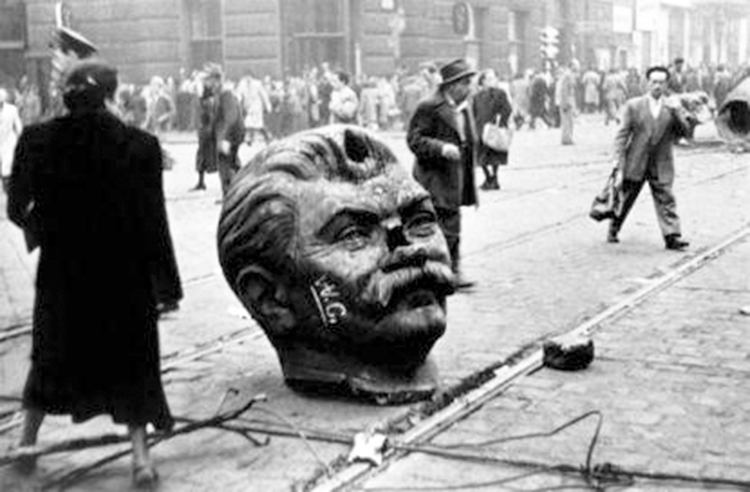
Further evidence is found in a U.S. Army intelligence report dated January 6, 1956, which includes information from a Hungarian officer recruited two years prior. This officer disclosed the existence of an underground movement within the Hungarian military, comprising cells embedded in nearly every unit. Although the network was relatively small, it was well-organized and prepared for coordinated action against the state.
The actions of the rebels on October 23 and 24 reveal a high level of organization and strategic planning. When Soviet tanks entered Budapest early on October 24, they were met with well-coordinated groups of militants who were equipped with weapons, communication systems, and intelligence. The intense resistance faced by Soviet forces from the outset suggests that the rebels were not merely a spontaneous assembly of untrained civilians but a disciplined, prepared force ready for combat.
The widespread and coordinated nature of the rebellion across Hungary reinforces this perspective. While Budapest was the primary focus, uprisings erupted simultaneously in cities and towns throughout the country, each following a similar pattern of seizing government buildings, radio stations, and armories. The second largest and most intense uprising occurred in Miskolc, where U.S. intelligence reports identified several partisan camps around the city. These camps were well-equipped with radio stations, weapons, and supplies, underscoring the organized and extensive planning behind the rebellion.
The rebels’ ability to produce and transport nitroglycerin in Budapest further indicates premeditation. Nitroglycerin is notoriously challenging to manufacture safely, and the fact that the rebels managed to produce it in significant quantities within a short period implies prior knowledge and experience in its production. This capability suggests a level of planning and preparation that goes beyond spontaneous action.
The involvement of foreign intelligence agencies adds complexity to the notion of a purely indigenous uprising. U.S. National Security Council directives, such as NSC-158 and NSC-68, detailed American strategies to exploit unrest in Soviet satellite states. These directives explicitly called for the organization, training, and equipping of underground groups capable of conducting prolonged military operations, indicating a strategic external influence in shaping the events of the Hungarian Uprising.
While the precise details of external support remain debated, the Hungarian Uprising cannot be seen as merely a spontaneous revolt by an aggrieved populace. It emerged from extensive planning and coordination by domestic and foreign actors intent on challenging Soviet dominance in Eastern Europe.
Given this evidence, the events of October 1956 were less an unplanned eruption of popular anger and more the culmination of a meticulously orchestrated rebellion. This perspective does not diminish the bravery of the Hungarian people who fought for their freedom but offers a more nuanced understanding of one of the Cold War’s most significant events.
 The Communist International
Leave a comment