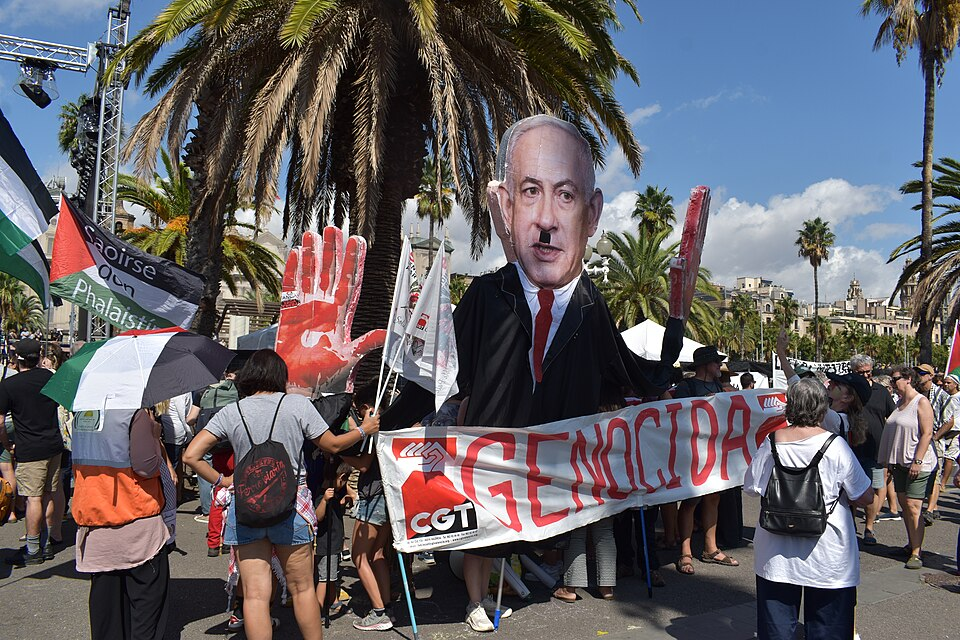
To blame Netanyahu for the genocide is to promise that his removal will end it, a promise the evidence does not support. The indictment belongs to Israel and to Zionism itself.
Executive Committee of the Communist International
In May 2026, the International Court of Justice set the schedule in South Africa’s genocide case against Israel: the Reply due November 2027, Israel’s Rejoinder due May 2029, plus a jurisdictional objection for the judges to resolve. The colonization of occupied Palestinian land runs on a faster clock. In December 2025, the Israel Land Authority published a tender for 3,401 housing units at E1, the plan that severs the northern West Bank from the south and from Jerusalem. On 15 February 2026, the cabinet allocated 244 million shekels to move land registration in Area C to the Ministry of Justice, which will record title to occupied land as if it were recording title in Haifa.
Blame Netanyahu, and his removal becomes the cure, a promise his liberal opposition needs as much as his U.S. sponsor does. Personalization is the regime’s insurance policy. Yet on 20 May 2026, the Knesset voted 110-0 to advance its own dissolution; elections are due by late October, and not one party with a chance of governing proposes to evacuate a settlement. The tender at E1 does not expire with the coalition that issued it.
The E1 plan is older than the government that is now executing it. Planners drew it up in the 1990s under Yitzhak Rabin’s Labor government, and it sat unbuilt for three decades because Washington and Brussels objected, not because any Israeli coalition did. The logic behind it is older still. In 1967, weeks after the conquest, Israeli minister Yigal Allon proposed permanent Israeli control of the Jordan Valley, a decade before the right-wing Likud party removed the Israeli left from power. Through the entire Oslo period, while negotiators shook hands on lawns, the settler population roughly doubled.
The current far-right coalition governing Israel works faster, approving 68 settlements in three years and bringing the official total to about 210. But the more than 500,000 settlers in the West Bank and 220,000 in East Jerusalem arrived under governments of every party, secular and religious, in coalitions of the right and of the center-left.
In June 2026, the Civil Administration expropriated 320 dunams at Herodium, southeast of Bethlehem, by order declaring it an archaeological site, the third such declaration of the year after Nabi Samwil and Sebastia. No shot fired, no law suspended. A clerk stamps a form, and a hilltop changes nations. The violence comes later, wearing the uniform of enforcement, to remove whoever the paperwork has already dispossessed.

The UN Human Rights Office recorded 1,732 settler attacks that caused casualties or property damage in the 12 months ending 31 October 2025, up from 1,400 the year before. The same report put the number of forced displacements at more than 36,000 Palestinians. The bourgeois press files these under the heading of lawlessness, young men from the hilltops exceeding what the state permits. The filing is wrong on its own terms. Outposts that violate Israeli law are retroactively legalized, their access roads paved at public expense, their perpetrators of record among the residents.
The administrative reform of 2023 completed the arrangement. Enforcement of land use in the West Bank has passed from military control to civilian ministerial control, so the office charged with restraining the settlers and the office that rewards them with land now answer to the same minister. Theodor Herzl, Zionism’s founder, budgeted for an army. His successors found something cheaper. The settler clears land the state wants cleared, and the state compensates him not with wages, which would appear in a budget and could be cut, but with land itself, which appears in no ledger as a cost.
Before October 2023, about 178,000 Palestinians crossed the Green Line to work, which accounted for nearly a fifth of the Palestinian economy. The government order revoked permits in the days after October 7, and by the first quarter of 2025, the figure stood at nearly 35,300, most of them in the settlements. The jobs did not vanish with the workers, however. Israel signed bilateral labor agreements with India, Sri Lanka, Thailand, and Uzbekistan, issued roughly 61,000 new foreign work permits in 2025 alone, and now employs some 227,000 migrant workers. Many arrive in debt to recruiters at home; employers hold their passports; and housing sits on the work site, so losing a job means losing the bed in the same hour.
A worker who is exploited has a claim on his exploiter, the claim of being needed, and every strike in history has been built on it. The mason from Nablus now pays a smuggler up to a thousand shekels to climb the separation wall and sleeps in the unfinished buildings he plasters, hunted by the state that once bused him in. His replacement from Kerala is bonded through recruitment debt rather than checkpoints. Israeli capital has not freed either man, but it has made a decision about one of them: the Palestinian is no longer required, and his removal from the labor market precedes and prepares his removal from the land. E1 is the same decision, except written in concrete.
Palestinian citizens of Israel number about a fifth of the population, and the state that counts them cannot decide whether to let them vote for themselves. The Central Elections Committee has disqualified Balad repeatedly, once on the evidence of a bill it tried to submit, a Basic Law defining Israel as a state of all its citizens, and the Supreme Court has reinstated it on appeal each time. The same 2019 session disqualified Ofer Cassif, a Jewish communist standing for Hadash, for the same offense of challenging the state’s Jewish character. The committee’s choice of targets settles the question this article turns on. The test at the door of the Knesset is not ethnicity; it is consent to the settlement of the land, and the state screens Jews and Arabs alike.
Mansour Abbas ran the experiment of consent to its end. His Ra’am party entered a governing coalition with Bennett and Lapid in 2021 and delivered budgets to Arab towns as proof that participation pays off. In 2026, with the Knesset dissolving, Netanyahu’s allies moved to designate Ra’am’s parent movement, the Southern Faction of the Islamic Movement, a terrorist organization, a designation that would strike from the ballot the one Arab party that governed alongside Zionism. On 10 June 2026, Hadash, Ta’al, and Balad announced a joint slate without Ra’am.
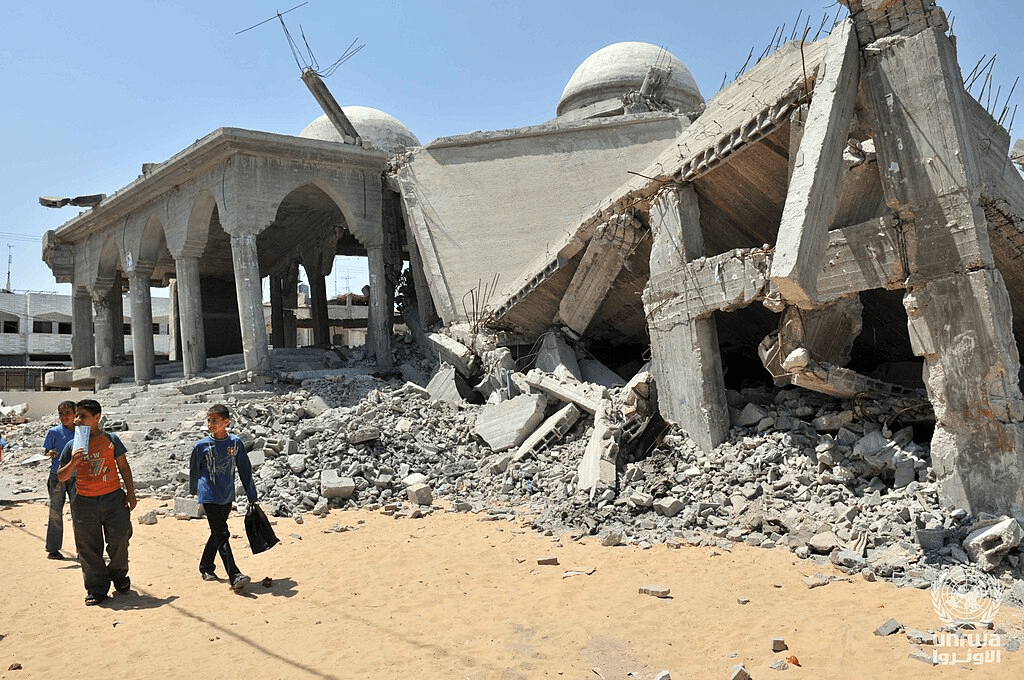
On 16 September 2025, the UN Independent Commission of Inquiry concluded that Israel is committing genocide in the Gaza Strip, finding four of the five acts enumerated in Article II of the 1948 Convention and establishing intent from the statements of Israeli officials themselves. The legal record was already thick. In July 2024, the International Court of Justice ruled that Israel’s presence in the occupied territory is unlawful in its entirety and must end as rapidly as possible, and the General Assembly set 18 September 2025 as the deadline for dismantling the occupation. The date arrived two days after the genocide finding and passed without consequence, no sanction, no embargo, not one severed contract from the states that had voted for the resolution.
Then came the ceasefire of October 2025, and with it the announcement that the war was “over.” More than 700 Palestinians have died in the Gaza Strip since. The Israeli military holds roughly 54 percent of the territory and has pushed its lines deeper during the truce, while two million people crowd into the remainder and 77 percent of the population faces acute food insecurity, under restrictions that reach as far as notebooks and pencils. Normally, a ceasefire ends a war between armies. This one reorganized a genocide: the bombardment that destroyed the victims’ conditions of life gave way to an administration that maintains them as destroyed, and the Convention’s third act requires only that the conditions be inflicted deliberately.
Every colonial project has its accounts, and this one settles them in three currencies. The first is the U.S. arms budget, which transfers $3.8 billion a year under the standing memorandum, money that returns as orders to the weapons plants whose congressional districts defend the appropriation. The second flows the other way: Israeli firms sell surveillance systems, drones, and border infrastructure abroad as combat-proven, which in this case means proven on a captive population of two million.
The third currency is land, and it purchases something subtler than profit. In June 2026, the government approved a fresh tax break for settlers, one item in a decades-old system of subsidized mortgages, discounted land from the state that seized it, and construction grants that exist across the Green Line but not within it. A young couple priced out of Tel Aviv can own an apartment twenty minutes east of Jerusalem for a fraction of the price, and the discount is the occupation. This is the mechanism the earnest liberal misses when he wonders why Israeli opinion will not turn: beneath the ideology sits a mortgage, and a worker who can be argued out of a conviction cannot be argued out of his equity. Half a million people in the West Bank now hold their single largest asset on land whose title depends on the permanence of the conquest.
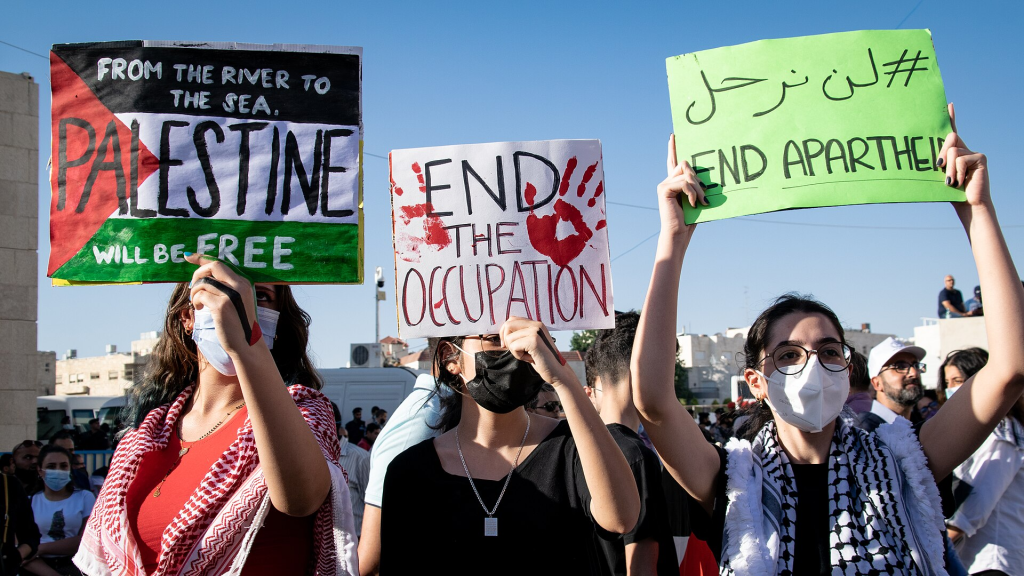
The charge will come, as it always comes, that to indict Zionism is to indict the Jews, an equation that is the joint work of the Zionist state and the antisemite, the only proposition on which they have ever agreed. In 1897, the year the First Zionist Congress convened in Basel, Jewish workers in Vilna founded the Bund, which became the largest Jewish workers’ organization in the Russian Empire and fought Zionism on the argument that the Jewish worker’s fight stood where the Jewish worker stood, beside the Polish and Russian worker, not in a colony purchased under an imperial patron. The 1928 Comintern Programme treated the pattern as general, condemning even Garveyism as “a peculiar form of Negro Zionism.” Territorial nationalism converts an oppressed people’s real grievance into a land claim some empire must underwrite, and the empire always names its price. The Israeli state confirms the distinction whenever its guard is down, disqualifying Ofer Cassif, a Jewish member of the Knesset, for anti-Zionism in the same years that Ra’am’s Arab deputies sat inside a governing coalition. The state screens for allegiance to the settlement, not descent.
As for the antisemites, they have chosen their side. Björn Höcke, a regional leader of the far-right party Alternative for Germany, called the Berlin Holocaust memorial a monument of shame planted in the nation’s heart. AfD co-founder Alexander Gauland dismissed the Nazi period as bird droppings on a thousand years of German history. Their party’s program declares its solidarity with Israel. There is no contradiction to explain. A movement that wants Europe without Jews and a state that wants the Jews of Europe gathered elsewhere are pursuing compatible ends. Both prefer a world sorted into ethnic states over the one thing they jointly fear: the worker who declines to be sorted and knows no nation.
Israel will hold elections by late autumn, and the world’s chancelleries have already written their hopeful columns about the day after Netanyahu. Enter the prediction here in advance, so it can be checked. A new government will change the tone of the annexation and not its schedule. The tender at E1 will proceed under a coalition of the center as it would under a coalition of the right; the registry in Area C will record title under whichever minister next holds the seal, and the reader who doubts this may consult the record of every Israeli government since 1967, each of which left office with more settlers on occupied land than it inherited. What the International demands requires no rhetoric, only enforcement of law already written: an arms embargo, which the Genocide Convention’s duty to prevent already obliges, suspension of the EU Association Agreement, whose second article conditions the arrangement on respect for human rights, dockworkers who decline to load the cargo, as they have declined in Genoa, Barcelona, and Piraeus, and trade unions in India and Sri Lanka that refuse to staff the labor agreements. None of this is insurrection.
The comparison to South Africa is now common currency, and it is usually used incorrectly. The apartheid regime did not fall because the world came to dislike P.W. Botha. It fell when the structure stopped paying, when the rand could not be defended, when capital that had banked the system for a century concluded the system was the risk. And when it fell, the South African mines stayed where they were: the men who owned the Anglo American Corporation before the settlement owned it after. A ruling class that senses its own end will negotiate the flag, the anthem, and the franchise, and it will hold the land and the budget through the transition, unless the workers who forced the transition are organized to finish it. The Palestinians will win their state against the settlements. The question that follows the victory is already written in Johannesburg.


Leave a Reply