The state that set out to abolish the propertied class now mints dollar billionaires faster than Washington. The party that governs the largest working class on earth has become the political staff of its bourgeoisie.
Executive Committee of the Communist International
The National Bureau of Statistics announced on 15 July that output in the second quarter increased by 4.3 percent compared with the corresponding quarter of 2025. This figure is the lowest recorded since the end of 2022. It is below the 4.5 percent minimum that the State Council had set for itself in March, and it comes after the first quarter, which had registered 5 percent. When measured against the previous three months rather than the previous year, the decline is more pronounced.
Investment in real estate development dropped by 18 percent, infrastructure by 2.4 percent, and manufacturing by 1.2 percent. Retail sales in June increased by one per cent after having declined the previous month. Despite all this, exports rose by 27 percent year over year in June, mainly due to semiconductors destined for overseas data centers, and monthly car exports exceeded one million units for the first time in history.
The Bureau uses a term to describe this kind of pattern: it says there is a structural imbalance with strong supply and weak demand, while asserting that the national economy “operated within an appropriate range.”
For analysts in the financial press, the announcement raised questions about the timing. Specifically, they were concerned about the size of the forthcoming bond issuance, when the easing would take place, and whether Beijing would achieve its target by December. Sixty-nine trillion yuan’s worth of output was produced in six months by certain hands under certain conditions, and the press ignores this.
In March, the Hurun Report—which has been monitoring wealth in China since the late 1990s—reported that there were 1,110 billionaires in China, Hong Kong, Macau, and Taiwan, a number greater than that of any other country in the world. Forbes, which includes only the mainland and uses a more rigorous valuation method, arrived at a figure of 539, an increase from the 450 recorded the previous year. If we take the smaller figure, then the People’s Republic, which was founded to eliminate the propertied class, is producing billionaires at a faster rate than the U.S.
According to Hurun itself, three-quarters of those people were not included on the list ten years ago. It isn’t the case of old wealth having survived a revolution which had failed to affect it. Rather, it is wealth that is new, having been produced under a party which still refers to Marx in its constitution and flies a red flag without irony.
The biggest increases in value over the last year were in the semiconductor and AI sectors—again, the same industries whose exports the Bureau pointed to as responsible for stabilizing the second-quarter figure. Thus the strength of exports and the rise in private fortunes are two manifestations of the same process. The state channels capital into advanced manufacturing, which in turn produces billionaires, while the working class receives wages that keep retail sales at just 1 percent.
Someone who supports Beijing would reply that the key sectors are still under state control, with the banks, the power grid, and the railways all complying with the plan. That may be true. The issue is rather who the plan benefits. A state that owns the banks and lends them out to enable 539 people to build up their fortunes has not suppressed the bourgeoisie; it has given the bourgeoisie the means of accumulating wealth.
Marxism has a term for how policies created the modern Chinese capitalist class. What the classics called primitive accumulation, the forcible separation of the producer from the means of production and subsistence, was carried out in China after 1978 by the communist party that had carried out the opposite thirty years before.
Consider how the first private employers were licensed. A communist party cannot easily permit capitalists, so Deng’s reformers went to the text. In Volume I of Capital, Marx marks the point at which a man ceases to labor alongside his hands and begins to live off their surplus, and he sets it, by way of illustration, at eight workers. The reformers read the passage and drew the obvious administrative conclusion: An enterprise with seven or fewer employees was not capitalist. The proprietor was a laborer among laborers, a household operator, a getihu (个体户). There were perhaps 160,000 such households in 1978. By 1984 there were more than seven million.
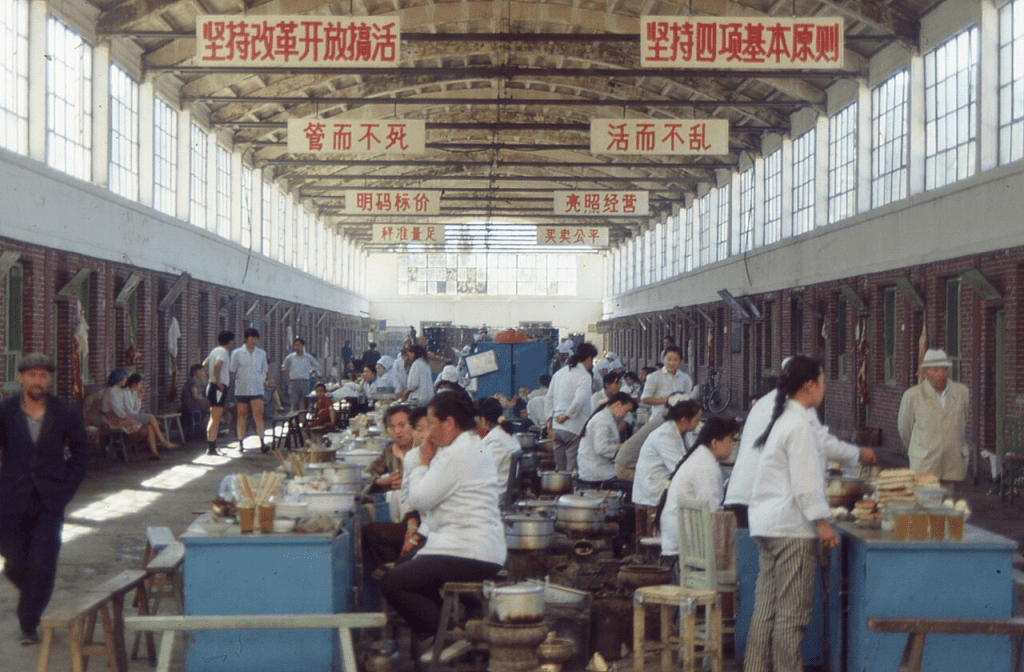
Above the household, the larger firms needed cover of a different kind, since through much of the 1980s a frankly private company of any scale had no legal ground to stand on. The solution was the “red hat.” A private enterprise registered itself as a collective or as a township-village enterprise, borrowed the standing of public ownership, drew on state credit and protection, and remained private in everything but its filing. The socialist sector grew on paper while a capitalist class grew inside it.
Then the older working class was dismantled. The state enterprises had guaranteed employment, housing, medical care, and pensions, the whole arrangement known as the “iron rice bowl.” In the 1990s the state broke it. Tens of millions were laid off. The land under the villages, held collectively, was expropriated by local governments and passed to developers. That is the origin of both the property boom and the peasants driven off the soil and into the coastal factories as wage laborers, with nothing to sell but the capacity to work. This is what accumulation requires at its outset: a mass of people with no property and no choice. The Chinese state manufactured it deliberately.
One of the party’s own theorists saw it coming. In the early 1980s, Deng Liqun, reading the same Capital his colleagues had mined for the seven-worker rule, warned that the rural enterprises were breeding a class of exploiters inside the revolutionary state.
To call a party revisionist is not to say it has grown corrupt or gone soft. Revisionism is a definite thing. It is the revision of Marxism in the direction of the bourgeoisie.
The road was mapped once already, at the Sixth Congress in 1928, in the Comintern program, adopted against the parties of the Second. Social democracy had traversed the road from revisionism to complete liberal-bourgeois reformism and to avowed social-imperialism. In place of the Marxian theory of the contradictions of capitalism, the bourgeois theory of its harmonious development. The theory of crises, pigeonholed. The theory of class struggle gave way to the advocacy of class peace. The theory of the revolutionary downfall of capitalism was replaced by the belief that sound capitalism would transform itself peacefully into socialism. Revolution replaced by evolution.
Read that inventory against Beijing and the correspondence is exact.
The theory of the contradictions of capitalism has been replaced, in the doctrine of the socialist market economy, by the theory of its harmonious development; the market and the plan no longer at war but joined in what the Party’s own economists once called a holy alliance. Class struggle has been declared essentially concluded within Chinese society, class peace elevated to a governing principle, harmony written into the slogans of successive congresses. The revolutionary downfall of capitalism has given way to the doctrine that the productive forces must first be developed, under capitalist relations, for a long historical period, after which socialism arrives without a further rupture.
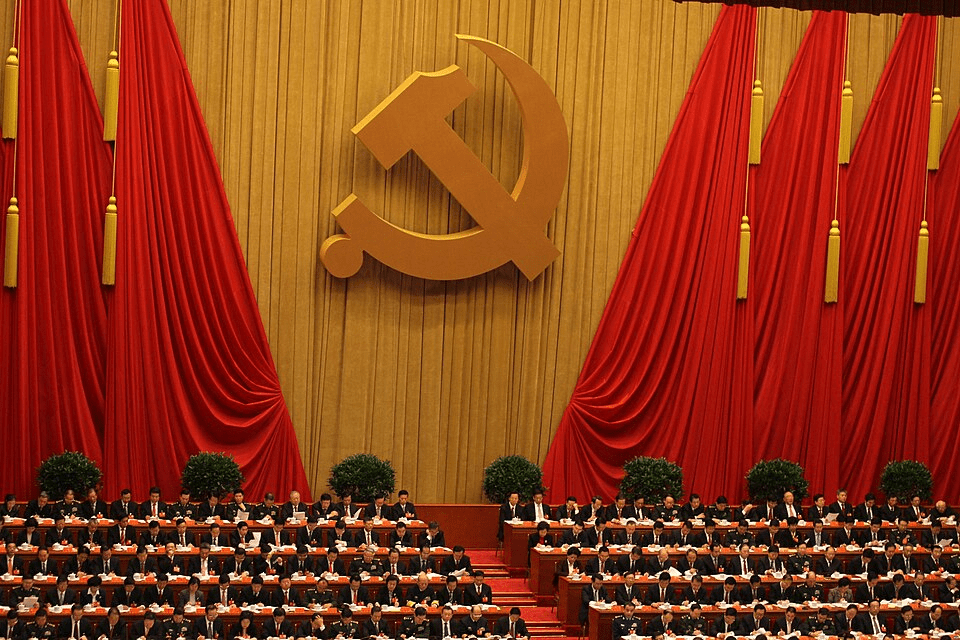
There is a difference between Beijing and Bernstein, and it runs in Beijing’s disfavor. Bernstein at least revised the words. He said openly that “the movement was everything and the goal nothing,” that Marx required correction, and the orthodox could meet him on the terrain of theory and answer him there. Beijing revises nothing on the surface. It retains every word. It convenes its congresses under portraits of Marx, prints the classics, examines its cadres in the light of historical materialism, and calls the whole construction socialism. The vocabulary is preserved with care. Only the content has been inverted. A doctrine that keeps the name of the thing while abolishing the substance is harder to fight than open revision, because it fights on your own ground wearing your own colors.
Adopted in the 1980s and never since retired, CCP doctrine holds that China stands only at the beginning of a socialist epoch that will require a hundred years or more, during which the growth of the productive forces takes precedence and the transformation of the relations of production waits. The relations of production are the whole question. Who owns, who works. To defer them for a century is to defer them out of sight.

In the mineral-rich regions of Katanga, the Chinese company CMOC produced 117,500 tonnes of cobalt in 2025 and increased its proportion of the Congolese cobalt supply from 36 percent in 2023 to 57 percent in 2024. Chinese companies are involved in about 7 out of 10 industrial cobalt mines in the Democratic Republic of the Congo, and their refineries process the majority of the world’s cobalt supply. In Zambia, which defaulted in 2020, China is the country’s largest bilateral creditor and holds over $4 billion in debt through its Export-Import Bank alone. The restructuring, which was completed at the end of 2025, now allows Chinese mining firms to pay their Zambian taxes in yuan, an amount the government anticipates will account for 15 percent of all tax revenue this year. Kenya has converted five billion dollars of its railway debt into yuan.
What this represents is not assistance, but the export of capital, a feature which Lenin identified as specific to imperialism in its monopoly phase and one that should be distinguished from the simple export of goods. When a creditor uses copper regions as collateral, charges a debtor country’s taxes in its own currency, and keeps the mines in reserve in case of default, it is not promoting workers’ development in the Congo or Zambia. It is setting up the kind of relationship that Lenin described: the division of the world among associations of capitalists, a division now being carried out from Beijing.
Two incorrect narratives are prevalent. The first asserts that since Chinese capital is active in Africa, China is just another imperialist power, no different from the old ones. The United States has the right to organize the world to oppose it. This is the viewpoint of the State Department and of the think tanks it supports, and we dismiss it. The encirclement of China is real, the tariff barriers are real, the naval presence in its seas is real, the campaign aimed at suffocating its advanced industry is real, and the workers of the world have no interest in determining which bloc of monopolists controls the supply of cobalt. We do not take part in such a war. When Washington’s research institutions prepare their reports on Chinese behavior, they do so as belligerents in that war, and a communist would read them just as one would read any report from an enemy general staff, examining only what can be verified and not the conclusions.
The second false narrative is in fact a variation of the first. It states that since Washington threatens China, the duty of the communists is to defend Beijing, regard China’s firms in the Congo as partnerships, treat its loans to Zambia as acts of solidarity, and see every criticism of Chinese capital as merely an echo of imperialist propaganda. This is campism, and it results in the defense of the indefensible. The miner in Zambia whose wages are determined by a Chinese company and whose taxes are collected in yuan does not see Beijing as a comrade; to tell that worker otherwise is to abandon them to adhere to a diagram in which China is placed at the progressive end.
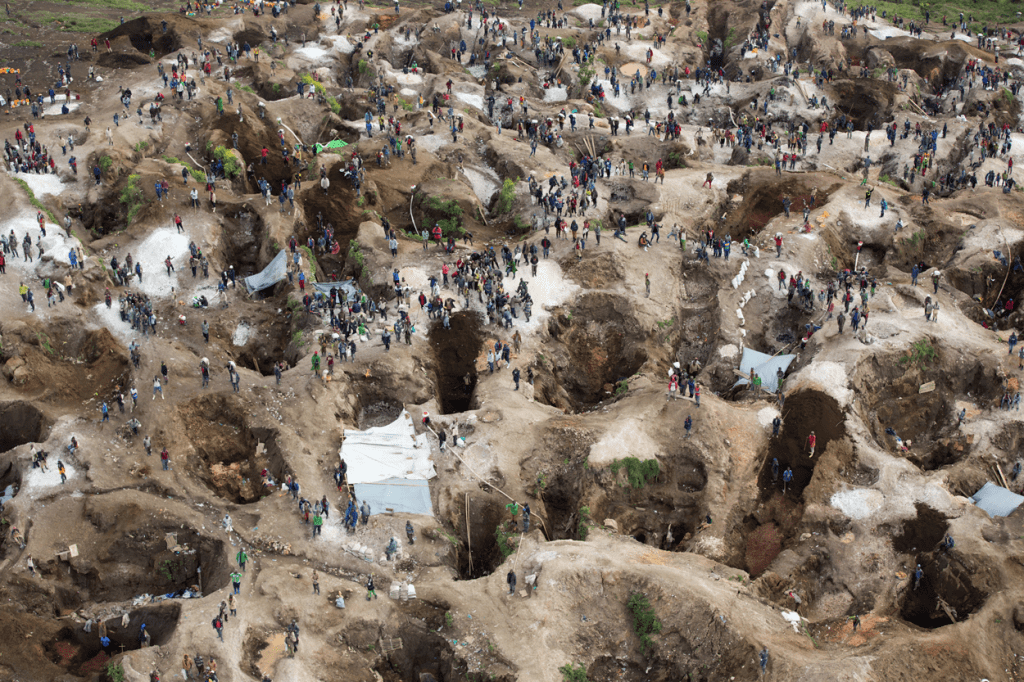
There is a common assumption in both accounts: that a worker must select a state to support. We do not accept this assumption. The Comintern does not support states; rather, it stands with the proletariat of the Congo (and the world) against the company that operates the mine, no matter what flag it flies. It refuses to be drawn into either camp in the rivalry between two rival capitalist steering committees.
The Communist Party of China is neither a workers’ party that has made mistakes nor a fraternal association that has gone off the track and needs to be corrected from outside. It is, in fact, the political arm of the national bourgeoisie; it looks after the interests of that class, uses the full force of the state to secure its property, controls its workers through a union that is answerable to the employers, exports its surplus capital, and safeguards its assets overseas. The fact that it carries out all these things while still calling itself a communist is the specific way in which its revisionism manifests, and this is also why its example is so damaging to the movement wherever the name of communism still enjoys loyalty.
It is argued that this decision shows arrogance, since a group in charge of one-fifth of the world’s population has thereby gained respect, and because lifting hundreds of millions out of poverty settles all criticisms. Poverty has indeed been reduced; this has happened in other capitalist economies as they have risen industrially, and therefore the reduction of poverty through the development of capitalism is not an example of socialism but rather a benefit of capitalism carried out at a great human cost.
The Chinese working class has not been involved in any of these developments. Over the past few decades, about 100 million former peasants have been taken off the land and into coastal industries, thus forming a proletariat on a scale unprecedented in world history. In 2024, the government’s labor offices recorded 665,000 disputes concerning unpaid wages, compared with 109,000 in 2007. This figure includes only disputes that reached an office. This class did not agree to the sale of the collective assets, was not consulted before the Chinese welfare state was abolished, and has nothing to claim except its ability to work under the 996-hour system (workers clock in from 9:00 am to 9:00 pm, six days per week).
Among that group, rather than within the party which claims to rule, lies the communist future that China will achieve. The party as it presently exists is not the means by which that future will be realized; on the contrary, it stands as an obstacle to it. We note this fact neither with satisfaction nor with despair, since the act of recording facts marks the start of the work. There is a great deal of work still to be done, not only in China.


Leave a comment